
S1 & S2 Drama
1 curricular class per week
- Pupils will learn about:
- Core Skills – Concentration, Communication, Team Work.
- Drama Techniques
- Mime and Movement
- Interpreting Script
- Production Areas
- Conventions
- Voice and Radio Drama
- Characterisation
- Stylised Movement
- Tension, Mood And Atmosphere
S3 Drama
In S3 students begin working towards National 4 or National 5 Drama.
- 3 periods per week timetabled Drama
In S3 students will work on longer projects as part of a team. S3 Students will learn about:
- Form, Structure, Genre and Conventions
- Using Production Areas with a Script. Pupils will interpret a script and take on production roles in a long project culminating in a final performance.
- Devising Drama: Plot, Target Audience, Message, and Purpose. Students will devise their own drama from a stimulus.
- The Drama Lexicon – a list of Drama vocabulary and definitions which they will need to know in order to succeed in National 5 Drama.
- Revising for an S3 theory exam.
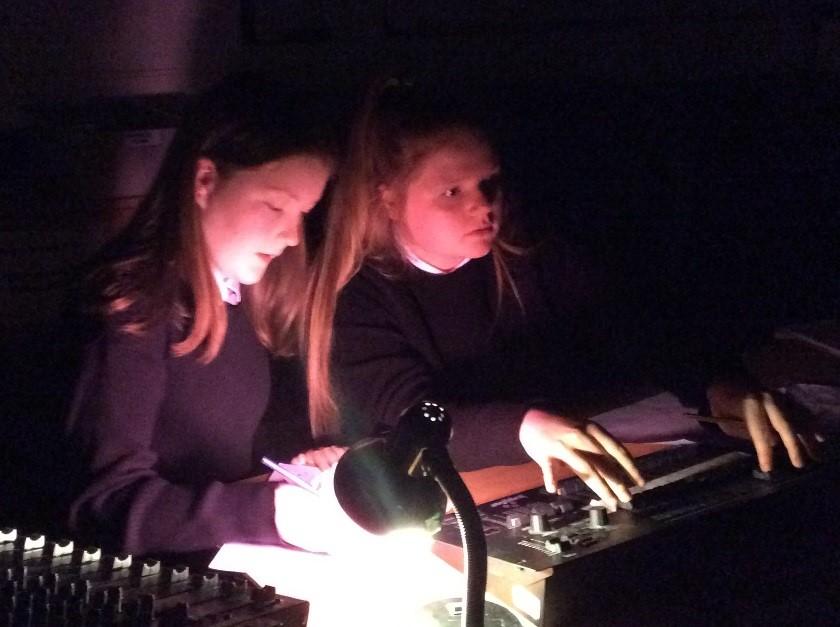
National 4/5 Drama
In S4 students sit National 4 or National 5 Drama, depending on their progress in S3.
National 4 students will:
- Work to devise a Drama as part of a team. Students must act in a drama devised by their group.
- Work to help create a Drama in a defined role as either an actor or designer (Set, Props, Costume, Make-up and Hair, Sound or Lighting)
- Complete a final project as either an actor or designer.
- Evaluate their own contribution to each of these projects.
National 5 Pupils will
- Work to devise a Drama as part of a team. Students must act in a drama devised by their group.
- Work to help create a Drama in a defined role as either an actor or designer (Set, Props, Costume, Make-up and Hair, Sound or Lighting)
- Complete a final project as either an actor or designer for the final practical exam which is worth 60% of their final grade. This exam is usually held towards the end of March/
- Evaluate their own contribution to each of these projects.
- Revise for the final written exam in May, worth 40% of the final grade.
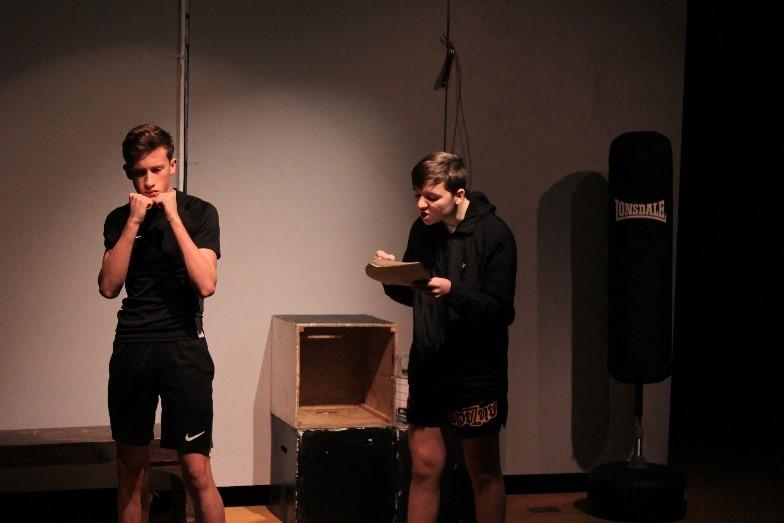

Higher Drama
Higher Drama combines rigorous academic study with practical work as an actor, designer or director.
- Creating: Students plan, research and rehearse scripted drama.
- Relating to and working with others: Students negotiate to work part of a team on complex long term performance projects.
- Planning and organising: Students work to strict deadlines for final performances.
- Thinking critically and creatively: During the rehearsal and planning process students will problem solve and adapt work in order to improve it.
- Literacy and communication: Students analyse complex text and develop verbal and non-verbal communication skills, including voice, movement and characterisation skills
Many universities consider a pass in this subject to be a sign of academic ability and a sign of the pupil’s ability to communicate with others and present work to others in a prepared and professional manner.
ASSESSMENT
- Practical Exam in Acting, Directing or Design - Candidates will either act in two 7-10 minute long scenes from two different plays, direct a 30 minute rehearsal, or design a set and one other production area for a play. This is assessed by an SQA Visiting Assessor (Feb-May). (50% of final grade)
- Preparation for Performance – a 10 mark report on the research and rehearsal process for the practical exam. (10% of final grade)
- Written Paper - The exam comprises one essay and several questions on the Set Text play and 1 Performance Analysis essay on a theatre production. This is externally assessed by SQA (May/June)(40% of final grade)
Advanced Higher Drama
In Advanced Higher Drama, learners work on long term projects, problem solve and work to strict deadlines, as well as develop verbal and non-verbal communication skills. The course encourages pupil-led learning and independent areas of individual study. Practical work focuses on modern acting theory and the influence of key theatre practitioners on the development of theatre practice, engaging with complex and challenging texts, theories and ideas in tutorials and rehearsals.
ASSESSMENT:
- The Assignment is worth 20% of the Final Grade. Learners research a production and answer a question on the work of a theatre practitioner within that production.
- The Project Dissertation is worth 30% and is a research project allowing a high degree of personalisation for the learner. This will be an in-depth piece of work based on the work of a current theatre director, practitioner, theatre company, playwright or designer. This project is externally assessed by the SQA.
- Practical Exam is worth 50% and can be completed as an actor, director, or designer. Actors present two contrasting drama pieces (one interactive and one monologue). Directors direct a key scene from their set text, and designers complete a full set design as well as folios on two other production areas for a play of their choice. All students are externally assessed by a visiting SQA examiner.
- Progression: This course is excellent progression to the study of Literature or Theatre Studies at University, or in fact any Degree Level Course. The course also provides preparation for rigorous training at Drama School and helps prepare for auditions due to the monologue component in the Practical Exam.